Enter your email for a chance at
$1000
to use in the Special Learning Store!!
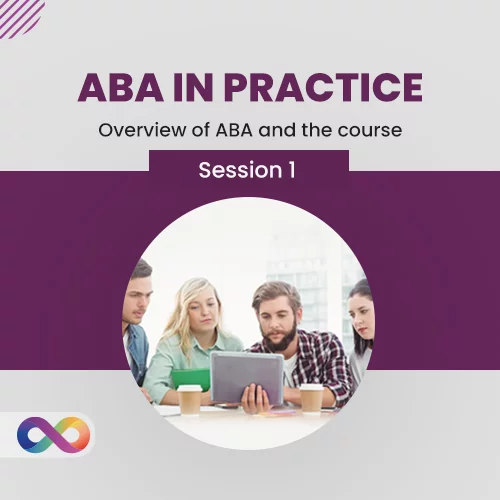
For readers learning how an ABA program is organized, Maria Nicolaou introduces measurable goals, behavior functions, reinforcement, communication and teaching methods through everyday examples. This opening session provides a vocabulary and course orientation, with deeper instruction reserved for later modules.
Catalogue presenter credits: Maria Nicolaou.
Disclaimer: The BACB does not endorse this course or its materials.
The recording traces a program from assessment and planning through data review, generalization and maintenance, then uses toothbrushing and supermarket examples to explain reinforcement.
Communication examples cover requesting, naming, receptive responding and imitation before brief introductions to prompting, task analysis, discrete trial teaching and natural environment teaching.
Recording context: This is an introductory session; detailed instruction is reserved for later modules.
The six-item evaluation mean was 2.50/5 across 3 complete responses, from 22 recorded rating responses. This mean includes only complete six-score responses. Source: Special Learning's course evaluation records, snapshot October 11, 2026.
Three selected anonymous responses appear below, with the wording and spelling retained. They describe learners' experiences and requests; they are not a guarantee of results or a claim that these comments represent every learner.
Spoke quickly but gave good examples
Course evaluation response, 2026
Provide more examples
Course evaluation response, 2024
correct closed captioning
Course evaluation response, 2024
For adding a review for this product you need to purchase current product and be authorized.